
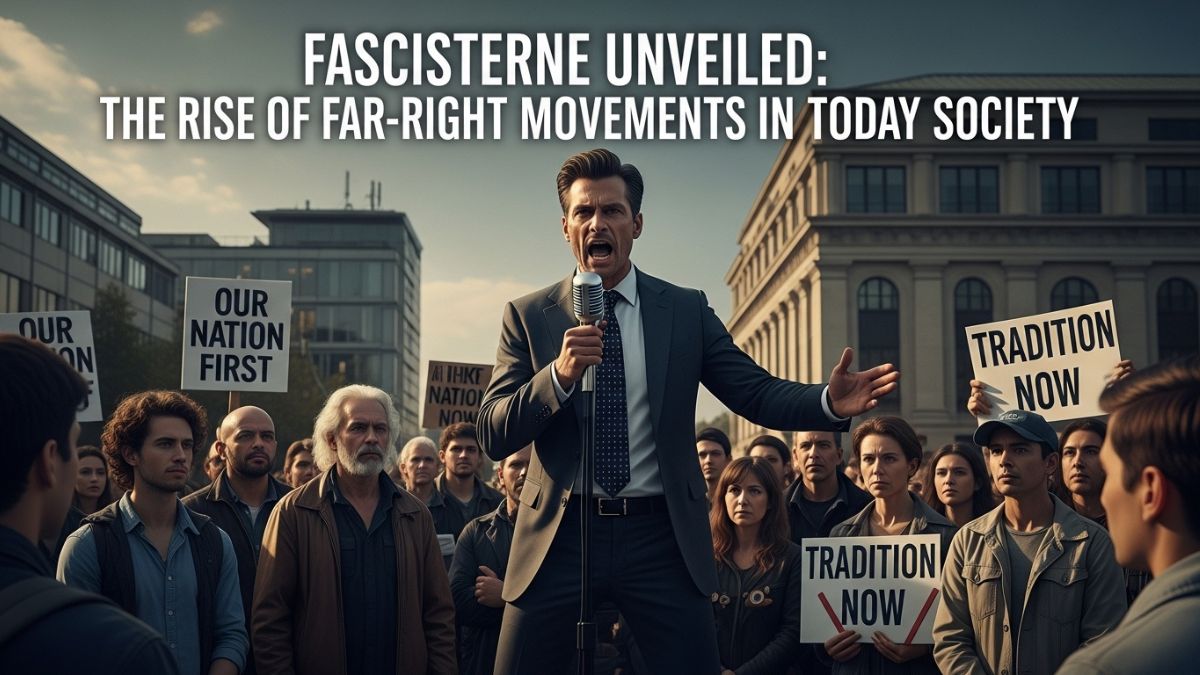
The world is witnessing an unsettling phenomenon: the rise of far-right movements and ideologies that echo the dark chapters of history. Fascisterne, a term that once seemed confined to textbooks detailing past atrocities, has made its way back into our daily discourse. As societies grapple with economic instability, cultural shifts, and political polarization, extremist ideas are gaining traction among various populations.
But what exactly does fascism entail? How did it evolve from its historical roots to manifest in today’s society? This blog post will delve deep into the complexities surrounding far-right movements and explore their modern resurgence. We’ll uncover how technology fuels these ideologies while examining real-world examples across different countries. Join us as we unravel this pressing issue impacting communities globally—an exploration crucial for understanding today’s socio-political landscape.
Understanding Fascism and Far-Right Politics
Fascism is often characterized by authoritarianism, nationalism, and the suppression of dissent. It thrives on a sense of crisis—be it economic, social, or political—and offers simplistic solutions to complex problems.
Far-right politics can manifest in various forms. Some groups may adopt overtly violent tactics, while others prefer more subtle methods like propaganda and disinformation. Both share a common goal: to create an exclusive national identity that marginalizes those deemed “other.”
Central to fascist ideology is the belief that society requires strong leadership. This often translates into hierarchical structures where loyalty to the nation supersedes individual rights. Fear becomes a powerful tool for manipulation, fostering division among communities.
Understanding these dynamics is crucial today as far-right ideologies resurface with alarming frequency across different regions of the world. Recognizing their signs helps us respond effectively before history risks repeating itself.
Historical Roots of Fascism and Its Ideologies
Fascism’s historical roots trace back to the early 20th century. Born out of discontent and economic turmoil, it emerged in post-World War I Europe.
At its core, fascism intertwines nationalism with authoritarianism. It seeks a strong leader who embodies the collective will of the people. This ideology often glorifies the state above individual rights.
The use of propaganda played a crucial role in shaping public perception. Fascist movements manipulated media to promote their vision, fostering an environment ripe for acceptance among disillusioned citizens.
Moreover, racial superiority became a significant component of fascist belief systems. The notion that one race is destined to rule over others fueled discrimination and violence throughout history.
These ideologies laid the groundwork for numerous regimes that would rise and fall across Europe and beyond. Understanding this background provides clarity on how such dangerous ideas can resurface today.
The Modern Resurgence of Far-Right Movements
The modern resurgence of far-right movements has taken many by surprise. Once marginalized, these groups have gained significant traction in various parts of the world.
Economic instability and social unrest have played pivotal roles. Many individuals feel disillusioned with traditional politics, seeking alternative solutions that seem more aligned with their frustrations.
Populist leaders often emerge as champions for these sentiments. They tap into fears related to immigration, identity, and nationalism. This speaks to a deep-seated desire for belonging among supporters.
Moreover, younger demographics are increasingly drawn to radical ideologies through digital platforms. The online landscape serves as an echo chamber where extreme views can thrive unchecked.
These developments signal a shift in societal attitudes towards established norms. As communities grapple with change, far-right narratives find fertile ground for growth and influence.
Impact of Social Media on the Spread of Fascist Ideas
Social media has transformed how ideas spread, including extremist ideologies. Platforms like Facebook, Twitter, and Reddit have become breeding grounds for fascisterne to thrive.
The anonymity offered online allows users to share radical views without fear of repercussions. This creates echo chambers where harmful beliefs are reinforced and amplified.
Algorithms often prioritize sensational content. As a result, posts that promote divisive rhetoric gain traction quickly. Users may unknowingly endorse these messages by sharing or liking them.
Additionally, the global reach of social media means that far-right movements can connect with like-minded individuals across borders. This fosters solidarity among groups that might otherwise remain isolated.
Misinformation plays a crucial role here as well. False narratives can easily go viral, leading to widespread misconceptions about race, immigration, and national identity—all common themes in fascist propaganda.
Case Studies: Examples of Far-Right Movements Across the World
In Europe, the rise of parties like the National Rally in France showcases how far-right ideologies can gain traction. Their focus on nationalism and anti-immigration rhetoric resonates with many voters feeling left behind by globalization.
Across the Atlantic, groups like the Proud Boys and Oath Keepers in the United States exemplify a different but equally concerning trend. Fueled by misinformation, they often engage in violent confrontations underpinned by extremist beliefs.
Moving to South America, Brazil’s Jair Bolsonaro represents a shift toward authoritarianism cloaked in populist language. His presidency has sparked debates about human rights and environmental policies while emboldening radical elements within society.
In Asia, India’s Bharatiya Janata Party (BJP) promotes Hindu nationalism that marginalizes minority communities. This shift reveals how far-right movements adapt to cultural contexts while pushing divisive agendas globally. Each case illustrates distinct narratives yet shares common threads of exclusion and fear-based politics.
Consequences of Fascism on Society
Fascism leaves deep scars on the fabric of society. Its rise often leads to polarization, pushing communities apart and fostering an atmosphere of distrust.
Economic policies under fascist regimes typically favor a select few while neglecting the majority. This creates wealth gaps and social unrest.
Civil liberties suffer as dissent is silenced. Freedom of speech becomes a battleground, where opposing views are met with hostility or even violence.
The psychological impact is profound too. Fear permeates daily life, affecting mental health and community cohesion. People may feel compelled to conform rather than express their true beliefs.
Education systems can become indoctrination tools rather than places for critical thinking. Young minds risk being shaped by narrow ideologies that stifle creativity and diversity.
Culturally, fascism seeks to erase differences in favor of a homogenous identity. This undermines rich traditions and histories that contribute to humanity’s collective experience.
Conclusion
The rise of fascisterne in today’s society is a complex issue that intertwines historical roots with contemporary challenges. The resurgence of far-right movements often capitalizes on societal anxieties, economic instability, and cultural shifts. These groups exploit fears and divisions to gain traction.
As we navigate this landscape, the impact of social media cannot be overlooked. Platforms allow for rapid dissemination of extremist ideas, creating echo chambers that amplify hateful rhetoric while silencing dissenting voices. This digital environment fosters polarization and radicalization among individuals seeking community or answers during uncertain times.
Examining case studies from around the globe reveals a troubling pattern: whether it’s in Europe, North America, or elsewhere, far-right movements are increasingly emboldened. They challenge democratic values and promote narratives rooted in exclusion rather than inclusion.